
Quand on pense au "survivalisme", on imagine souvent un ermite caché au fond des bois, vêtu de treillis et coupant du...
Derniers posts
-
 Pourquoi se préparer à une crise en ville : le guide complet pour débutantsLire plus...
 -
 Stock de Survie Alimentaire : Les 10 Aliments Indispensables en Cas de CriseLire plus...
Dans un monde où les incertitudes économiques, géopolitiques et climatiques font régulièrement la une des journaux,...
-
 Pyramides orgonites : entre art artisanal, énergie et symbolismeLire plus...
Bijoux, objets de décoration, générateurs d'énergie... Les pyramides orgonites fascinent autant qu'elles interrogent....
-
 L'Intemporelle Beauté de la Couleur RoseLire plus...
Le rose. Cette couleur si particulière qui évoque instantanément la tendresse, la féminité et la délicatesse. Dans...
-
 Les Kombolois : L'Art Ancestral des Chapelets de Perles MéditerranéensLire plus...
Dans l'univers fascinant des objets artisanaux traditionnels, les kombolois occupent une place particulière. Ces...
-
 Les Citrouilles Décoratives : Un Art Ancestral qui Illumine nos IntérieursLire plus...
La citrouille décorative est bien plus qu'un simple symbole d'automne. Cet humble cucurbitacée a traversé les siècles...
-
 Le matériel indispensable pour débuter en scrapbooking : votre kit de démarrage créatifLire plus...
Le scrapbooking, cet art de la mise en page créative qui consiste à valoriser photos et souvenirs dans des albums...
-
 Les Perles en Cristal : Trésors Millénaires de l'Artisanat ContemporainLire plus...
Les perles en cristal occupent une place privilégiée dans l'univers de la bijouterie artisanale et de la décoration....
-
 Les Attrape-Rêves : Histoire, Traditions et Création ArtisanaleLire plus...
L'attrape-rêves, ou dreamcatcher en anglais, est bien plus qu'un simple objet décoratif. Cette création artisanale...
-
 Les Statuettes d'Anges : Entre Tradition Céleste et Art DécoratifLire plus...
Les anges, ces êtres de lumière qui peuplent nos imaginaires depuis des millénaires, trouvent aujourd'hui une...
Catégories
Rechercher dans le blog
Pourquoi se préparer à une crise en ville : le guide complet pour débutants
When we think of "survivalism," we often picture a hermit hidden deep in the woods, clad in camouflage and chopping wood. Yet, today's reality is quite different. By 2026, the majority of the world's population lives in urban areas. And it is precisely there, in the heart of our hyper-connected yet ultra-dependent cities, that the risks are highest.
A prolonged power outage, a disruption to supermarket supply chains, a flood, or a health crisis: the city can go from comfort to chaos in less than 72 hours.
Do you live in an apartment or a suburban house? Do you think it's impossible to prepare without a garden or a 50-square-meter basement? This comprehensive beginner's guide will prove you wrong. You will discover why urban survival is essential and where to start today.
1. The Urban Paradox: Why is the city so vulnerable?
The modern city is a masterpiece of comfort... as long as everything works. This is what we call lean supply chain dependency.
The illusion of abundance: Supermarkets only have three days' worth of actual stock. If the trucks stop running, the shelves are empty within hours.
The gilded cage of technology: Without electricity, there are no more elevators, no more entry codes, no more ATMs, and above all... no more drinking water on the upper floors of buildings (the electric pumps stop working).
Population density: In the event of a major crisis, overcrowding increases stress, tension, and health risks.
Preparing for life in the city isn't about being paranoid. It's about being clear-headed and responsible towards yourself and your loved ones.
2. The 3 pillars of urban survival to get started
To avoid panicking, you need to structure your preparation. There's no need to buy military-grade gadgets. Focus on the essentials: the 3-pillar rule.
A. Water and food self-sufficiency
This is the foundation of any resilience. In a crisis, tap water can become unsafe to drink.
Short-term goal: Aim for 15 days of self-sufficiency.
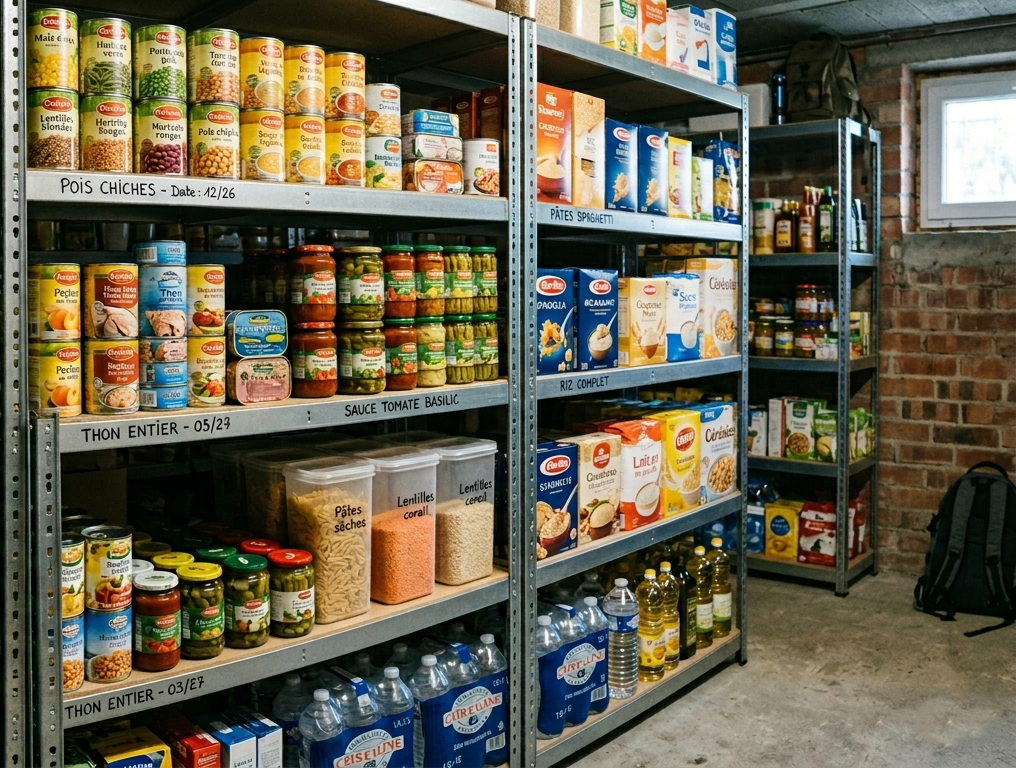
In practice: Store 3 liters of water per person per day. Prioritize non-perishable foods you already consume (pasta, rice, canned goods, dried vegetables) to keep your supplies flowing.
B. Energy and light
A power outage (blackout) is the most likely urban scenario.
Minimal kit: Headlamps, candles, spare batteries, and a solar-powered or fully charged external battery (power bank) for your phones.
For cooking: A small gas camping stove is an essential investment for cooking hot meals without electricity.
C. Safety and First Aid
In the city, emergency services can be overwhelmed. You must be able to treat minor injuries and secure your home.
Assemble a complete first aid kit (bandages, antiseptics, basic medications, current treatments).
Reinforce the passive security of your home (locks, smoke and carbon monoxide detectors).
3. The Importance of Organization: Fact Sheets and Checklists
The beginner's biggest enemy is being scattered. Buying equipment randomly is pointless if you don't have a precise plan. This is where the administrative organization of your survival comes into play.
To move from theory to action without stress, you must map out your needs:
What is the exact number of calories my family needs for a month?
What are the emergency numbers and meeting points if mobile networks fail?
What items should you pack in a bug-out bag?
Having practical guides and ready-to-use checklists frees up a huge mental load. In a crisis, the brain loses 80% of its analytical capacity due to stress. Your guides will do the thinking for you.
A new approach to family resilience
Survival has long been a very masculine domain, focused on brute force or tactical gear. Yet, managing a crisis at home relies primarily on organization, daily logistics, children's nutrition, stock management, and empathy. A realistic, inclusive, and resolutely practical vision of self-reliance completely changes the game when it comes to protecting your home.
Ready to take action? Don't leave your family's future to chance.
Do you want to secure your home but don't know where to start? Do you refuse to spend hours searching for conflicting information online?
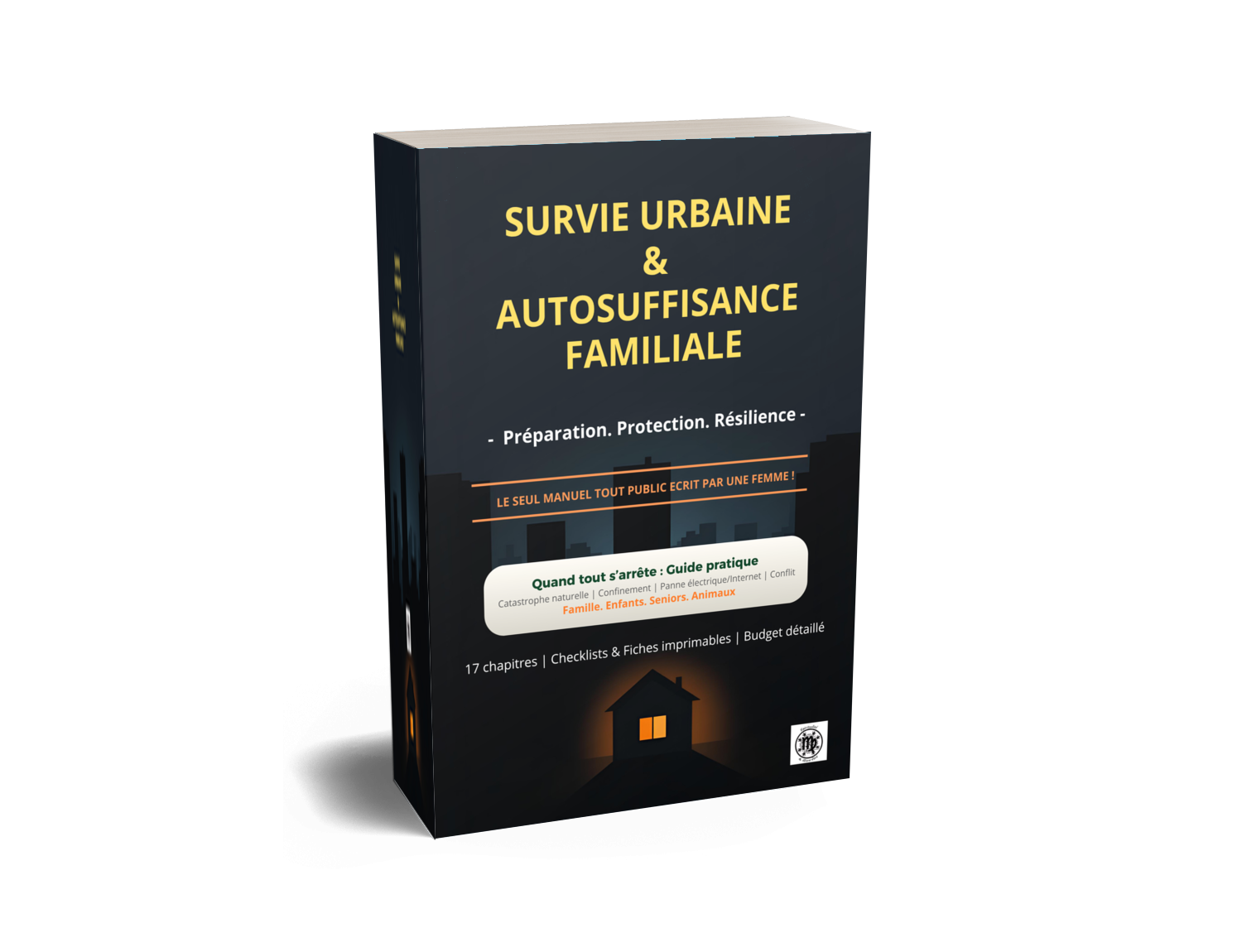
Discover the definitive guide that's revolutionizing survivalism: "Urban Survival and Family Self-Sufficiency."
Written by a woman to offer a fresh, pragmatic, and highly organized perspective on home security, this 261-page book is the first true self-sufficiency manual designed for real life.
For families. Avoid beginner mistakes, save time, and transform your apartment or house into a truly resilient haven of peace.
[Click here to get your copy and download your immediate practical guides!]
Posté dans:
Gestion de crise
Articles connexes
-
Stock de Survie Alimentaire : Les 10 Aliments Indispensables en Cas de Crise
Dans un monde où les incertitudes économiques, géopolitiques et climatiques font régulièrement la une des journaux,...Lire plus...
Laissez un commentaire