
When we think of "survivalism," we often picture a hermit hidden deep in the woods, clad in camouflage and chopping...
Latest posts
-
 Why prepare for a crisis in the city: the complete beginner's guideRead more
 -
 Emergency Food Stockpile: The 10 Essential Foods in a CrisisRead more
In a world where economic, geopolitical, and climate uncertainties regularly make headlines, the issue of food...
-
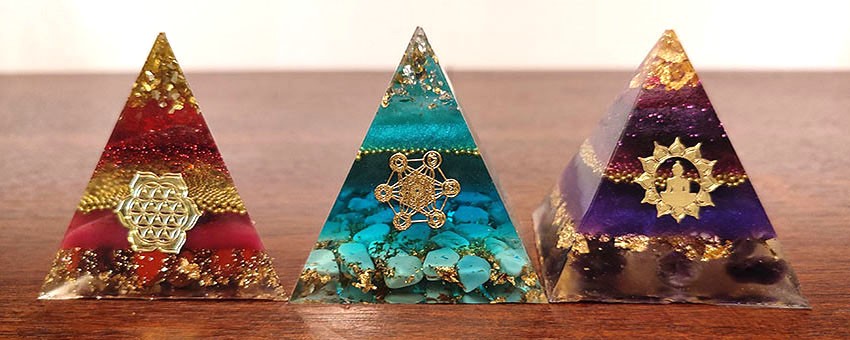 Orgonite pyramids: between craftsmanship, energy and symbolismRead more
Jewelry, decorative objects, energy generators... Orgonite pyramids fascinate as much as they raise questions. An...
-
 The Timeless Beauty of the Color PinkRead more
Pink. This unique color instantly evokes tenderness, femininity, and delicacy. In the world of handcrafted creations,...
-
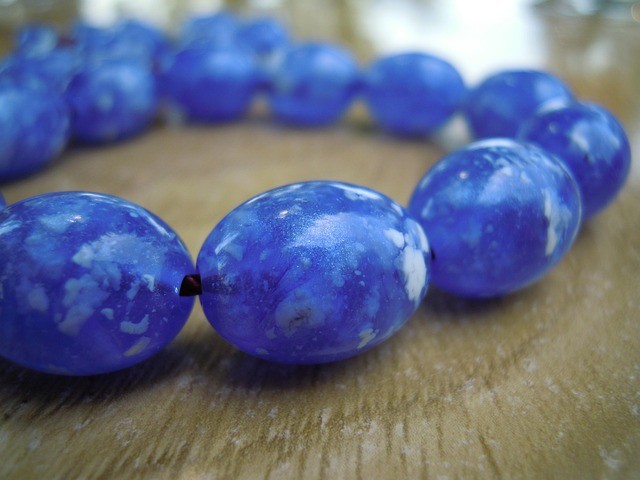 The Kombolois: The Ancestral Art of Mediterranean Bead StringsRead more
In the fascinating world of traditional handcrafted objects, komboloi hold a special place. These strings of beads,...
-
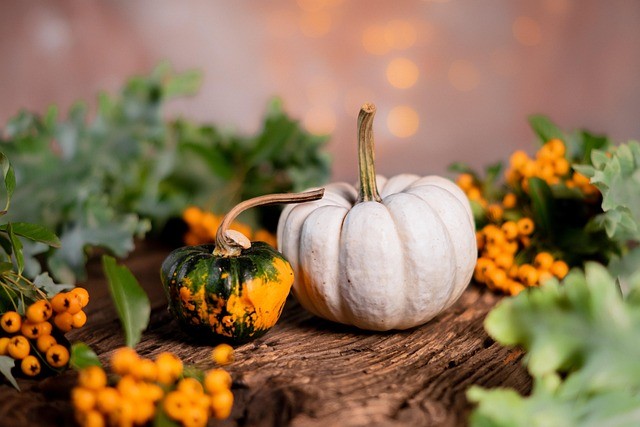 Decorative Pumpkins: An Ancient Art That Brightens Our InteriorsRead more
The decorative pumpkin is much more than just a symbol of autumn. This humble gourd has traveled through centuries...
-
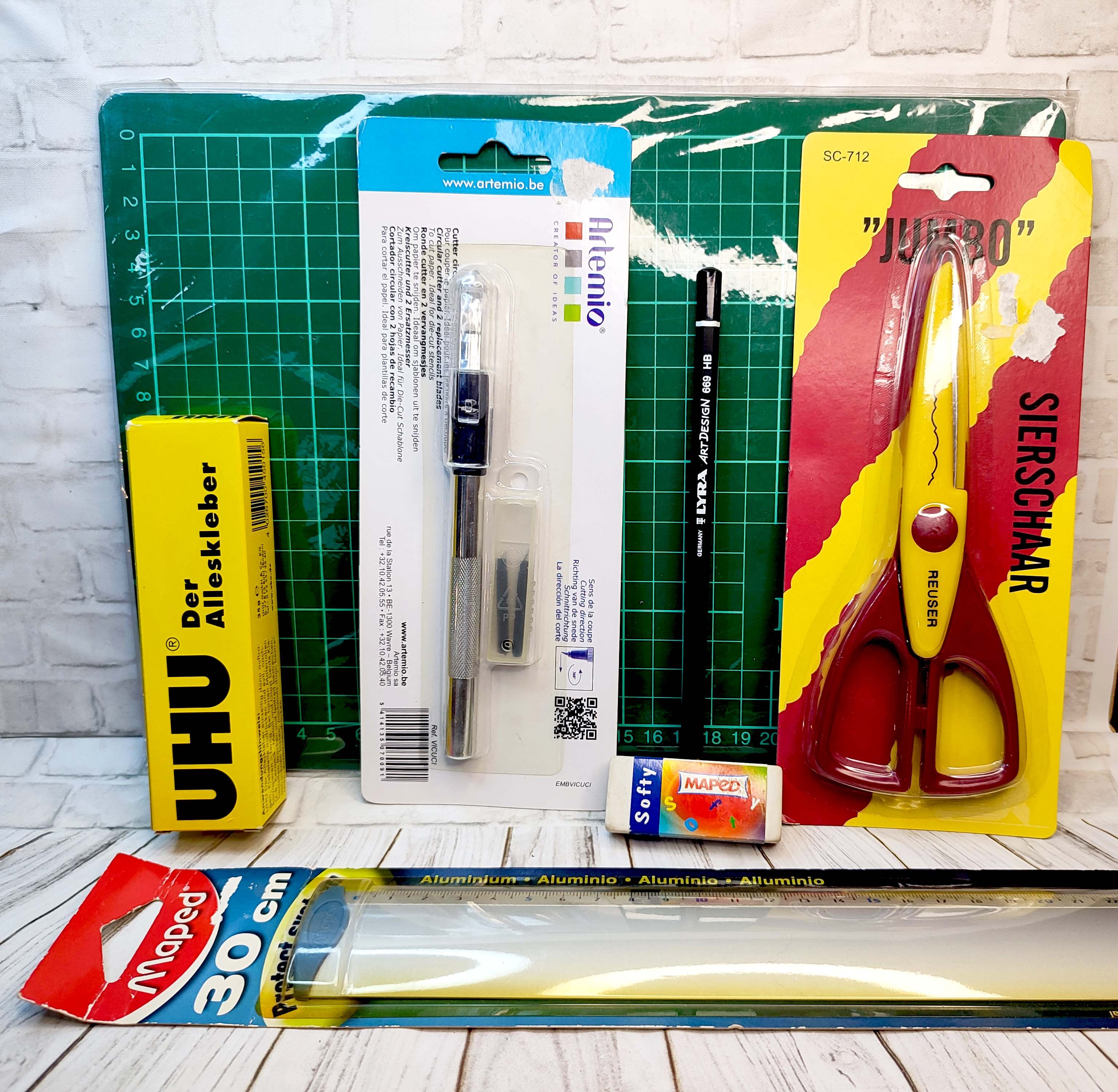 The essential materials for getting started in scrapbooking: your creative starter kitRead more
Scrapbooking, the art of creative layout that showcases photos and memories in personalized albums, is attracting a...
-
 Crystal Beads: Millennial Treasures of Contemporary CraftsmanshipRead more
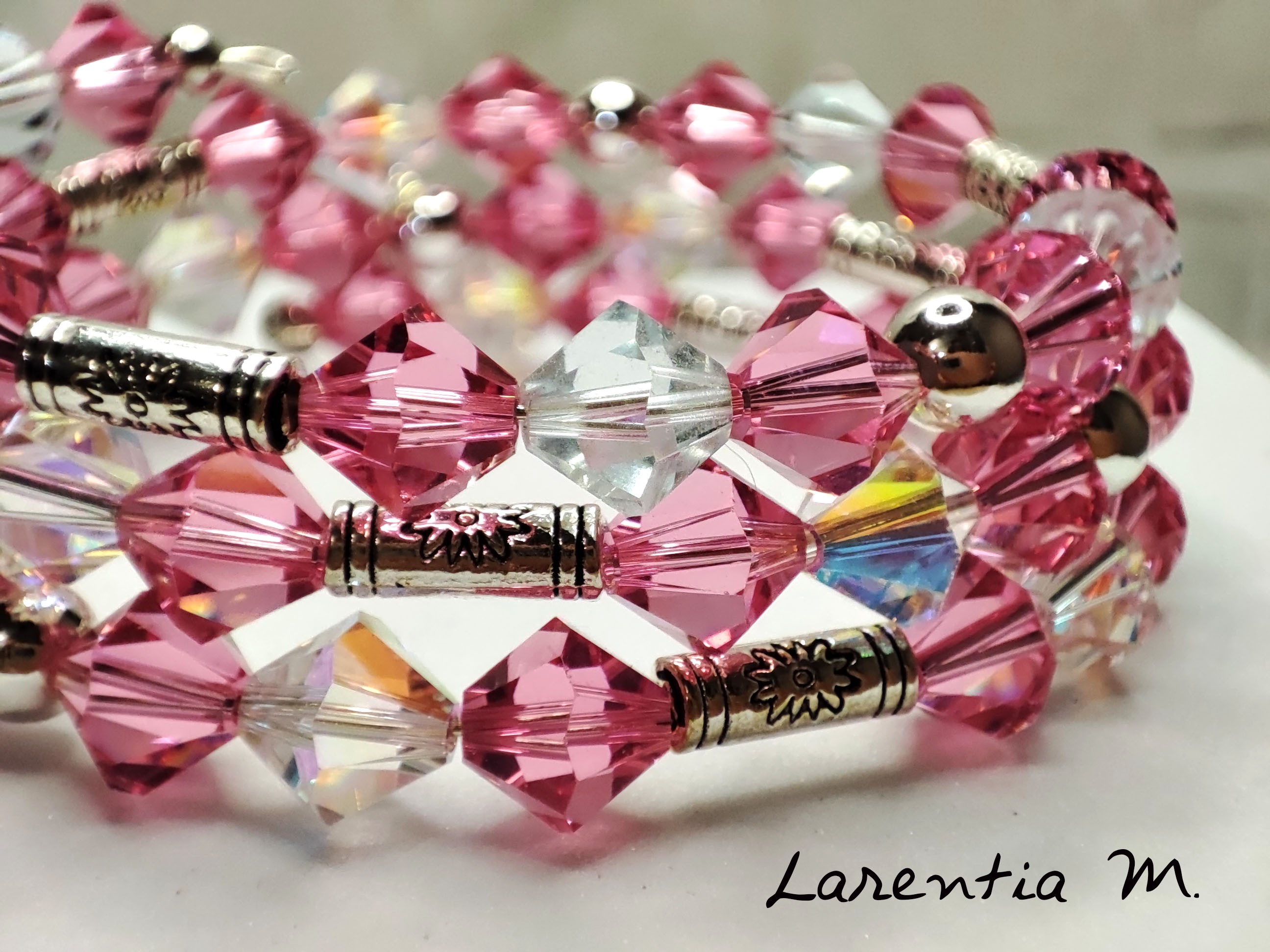
Crystal beads hold a special place in the world of handcrafted jewelry and home decor. These little marvels, the...
-
 Dreamcatchers: History, Traditions and Handcrafted CreationRead more
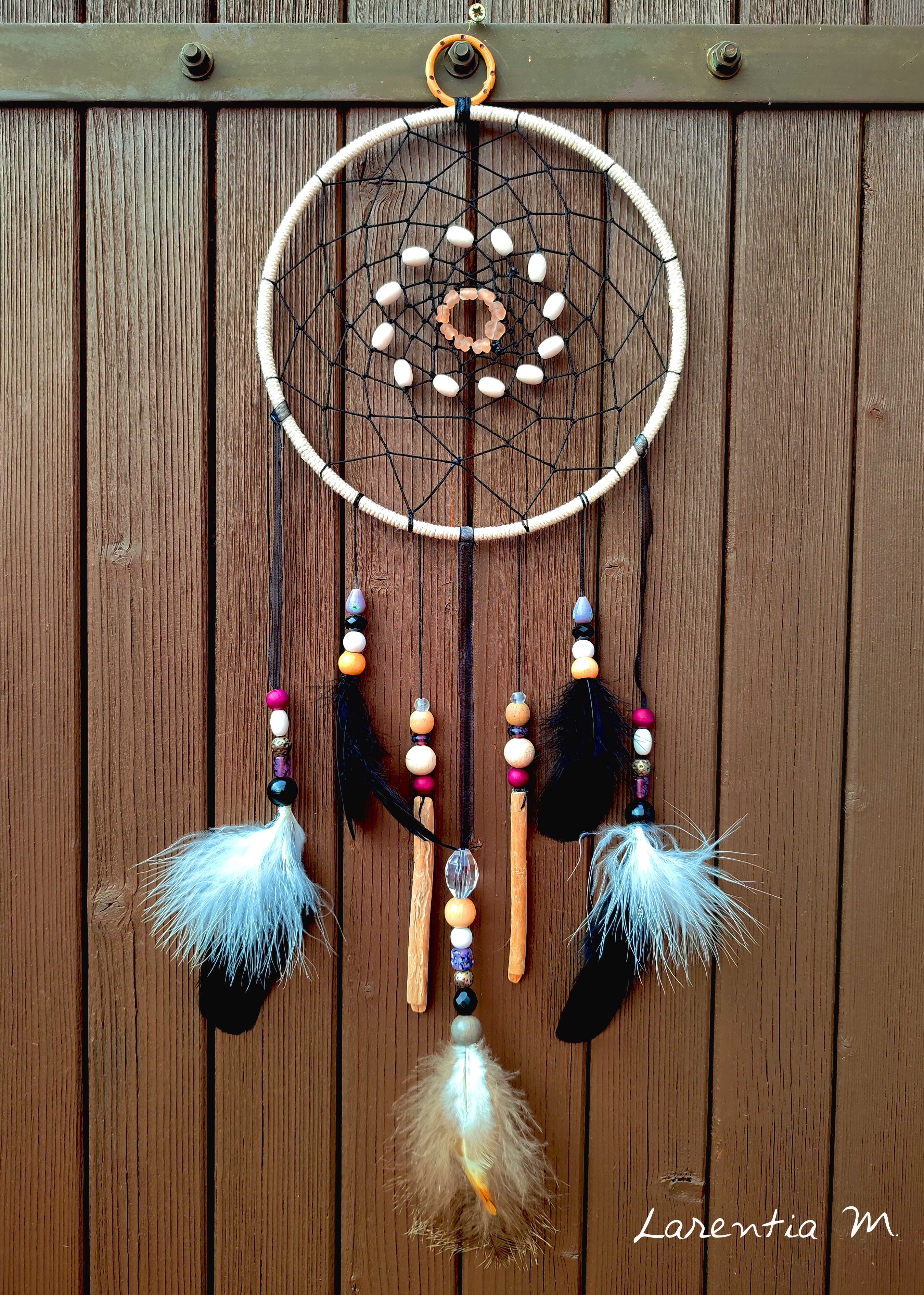
The dreamcatcher is much more than just a decorative object. This handcrafted creation, originating in Native...
-
 Angel Figurines: Between Celestial Tradition and Decorative ArtRead more
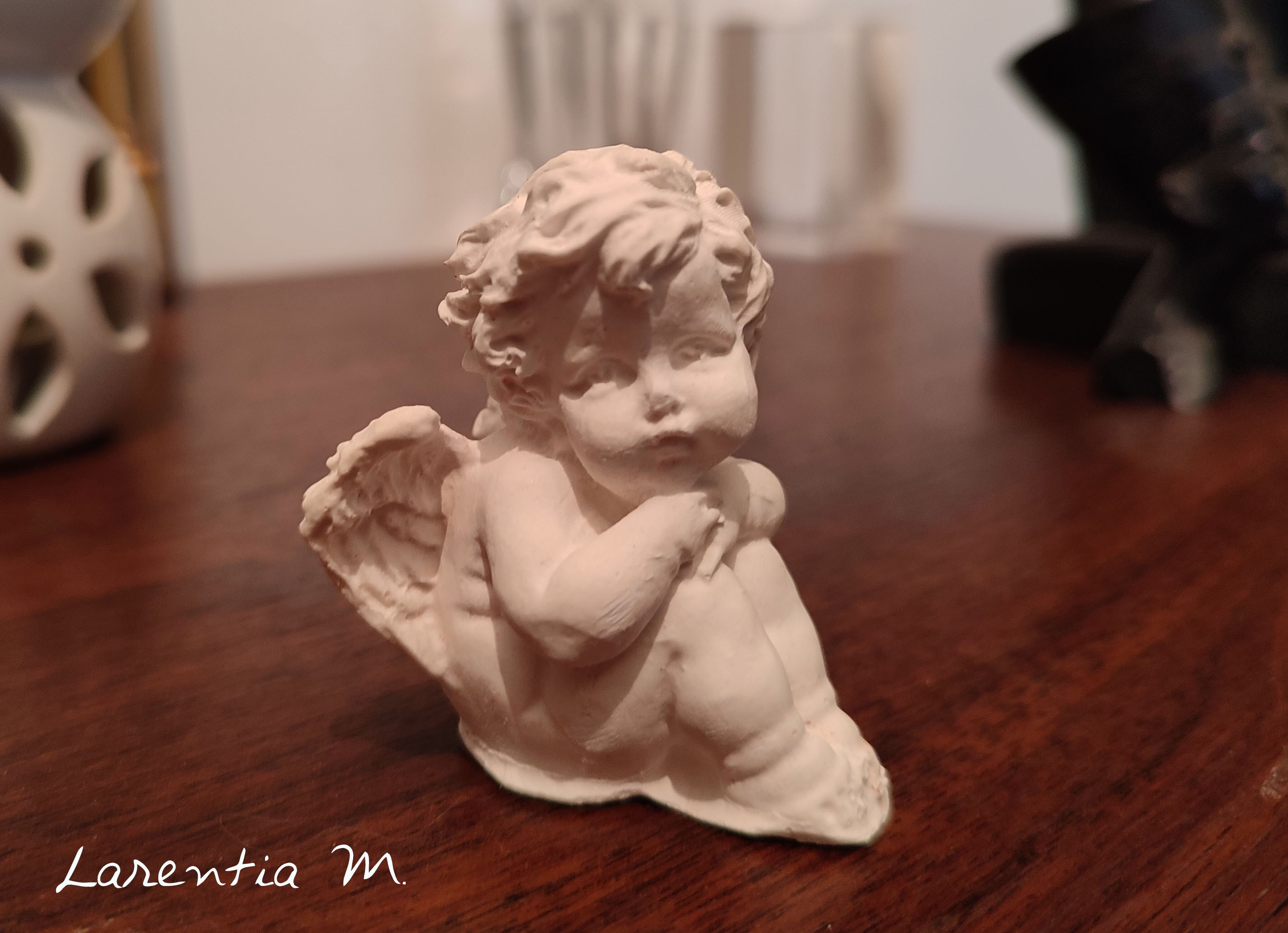
Angels, those beings of light who have populated our imaginations for millennia, are finding new expression in...
Blog categories
Search in blog
Dreamcatchers: History, Traditions and Handcrafted Creation
Dreamcatchers: History, Traditions, and Craftsmanship
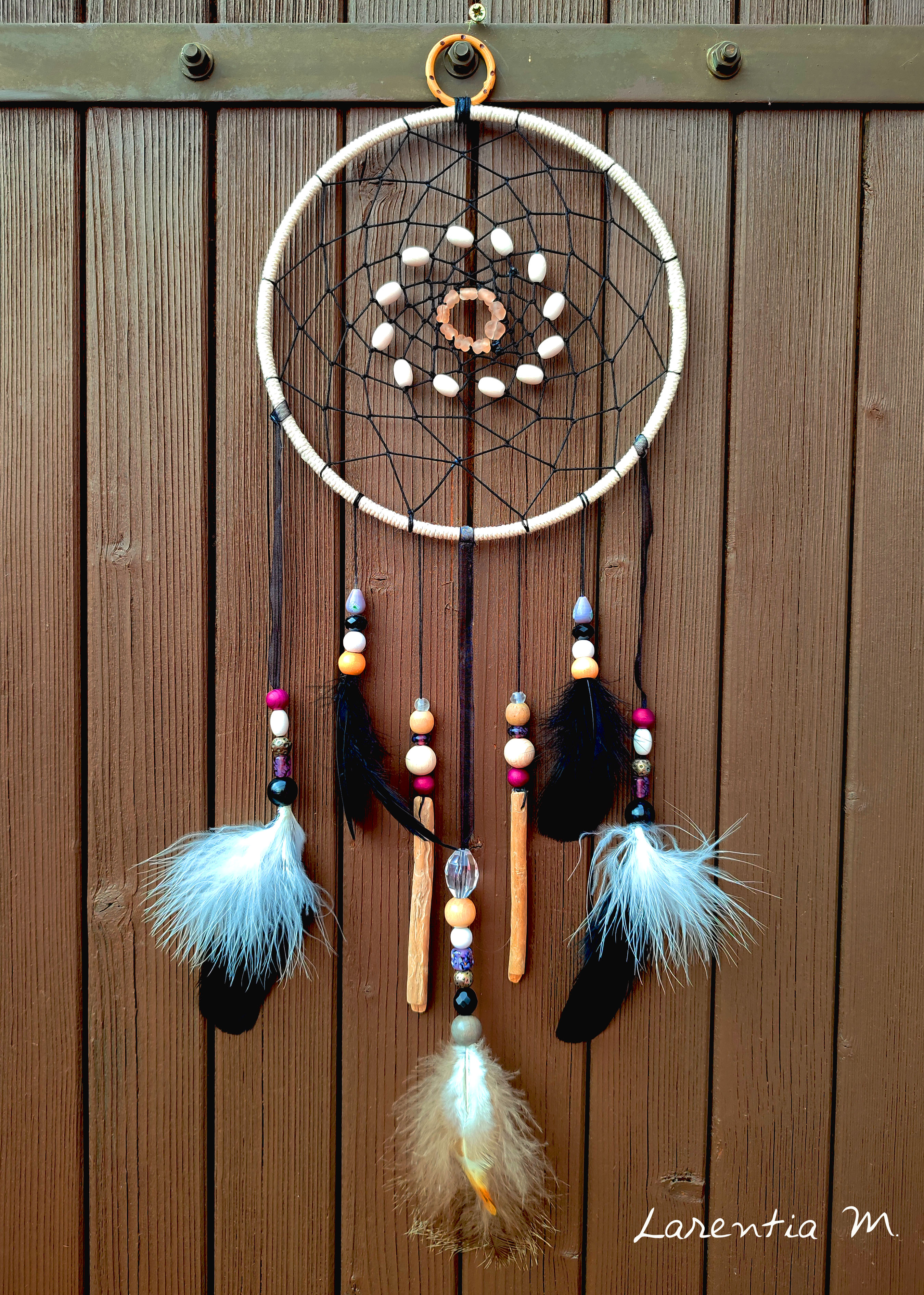
The dreamcatcher is much more than a simple decorative object. This handcrafted creation, originating with Native American cultures, embodies centuries of tradition, spirituality, and know-how passed down through generations. Now a popular element of interior design, the dreamcatcher fascinates with its aesthetic beauty and profound symbolism.
The Ancient Origins of the Dreamcatcher
The story of the dreamcatcher is rooted in the traditions of the Ojibwe (also called Chippewa) people, a Native American nation from the Great Lakes region of North America. According to Ojibwe legend, a mystical spider woman named Asibikaashi watched over all members of the tribe, especially children and newborns. She wove her magical web above their cradles to capture bad dreams and let good ones through.
When the Ojibwe people dispersed across vast territories, it became difficult for Asibikaashi to protect all the children. It was then that the women of the tribe began weaving webs similar to those of the protective spider, thus creating the first dreamcatchers. These sacred objects were traditionally made with red willow branches, milkweed fiber, and feathers.
Traditional Symbolism
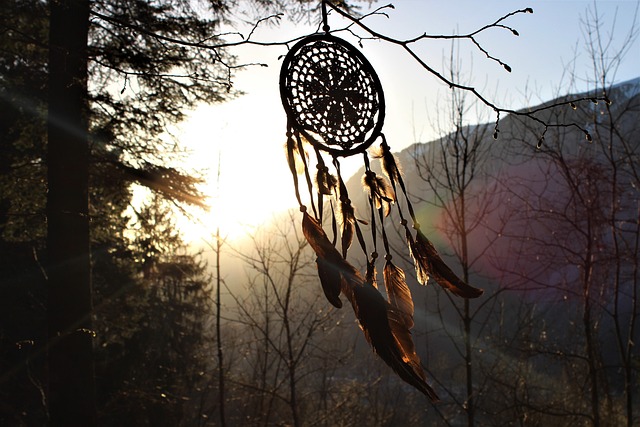
In Ojibwe culture, the dreamcatcher holds profound spiritual significance. The hoop represents the circle of life, eternity, and unity. The web woven in the center symbolizes the web of life and the connections between all living beings. Bad dreams are believed to get caught in the web and disappear with the first rays of sunlight, while good dreams glide along the feathers to reach the sleeper.
Each element of the traditional dreamcatcher has its own meaning: the feathers represent the air and breath necessary for life, the beads symbolize the weaving spider, and the natural stones can provide additional protective properties according to Native American beliefs.
Evolution and Cultural Diffusion
Over the centuries, the dreamcatcher has spread far beyond its territory of origin. During the 1960s, the Pan-Indian movement in North America helped introduce this tradition to other Native American tribes. Gradually, the dreamcatcher became a symbol of Native American identity adopted by many Indigenous nations.
This dissemination then expanded globally, particularly from the 1980s and 1990s onward, when the dreamcatcher gained popularity in Western culture. Today, it can be found in many countries, each sometimes adding its own stylistic variations while generally respecting the basic traditional form.
Regional Variations
Although the traditional Ojibwe dreamcatcher remains the standard, different regions have developed their own interpretations. In South America, some indigenous communities create versions incorporating local materials such as colorful tropical bird feathers or natural seed beads.
In Europe, the dreamcatcher has adapted to available materials, using hazel branches, linen or hemp threads, and local bird feathers. European artisans have sometimes incorporated additional decorative elements such as crystals, shells, or worked metalwork.
In Asia, particularly in India and parts of Southeast Asia, the dreamcatcher has been adopted and adapted with materials like bamboo, colored silk, and traditional local ornaments, creating interesting cultural fusions.
Crafting Your Own Dreamcatcher: A rewarding and accessible craft activity. Here are the steps to make a traditional dreamcatcher:
Materials needed:
A wooden hoop (willow, hazel, or bamboo) 15 to 20 cm in diameter
Strong thread or string (traditionally made of natural fibers)
Natural feathers
Wooden, stone, or glass beads
Leather or thin suede for wrapping the hoop (optional)
Steps:
Start by preparing the hoop, optionally wrapping it with leather or suede for a more traditional look. Then, attach the thread to the top of the hoop and begin weaving, creating regular anchor points around the circle, leaving about 3 cm between each point.
Continue weaving in a spiral toward the center, maintaining constant tension. Incorporate beads as you weave to add color and symbolism. The center should remain slightly open to allow good dreams to pass through.
Attach the feathers to the bottom of the dreamcatcher using thread or thin leather strips. You can add other decorative elements such as small stones, shells, or personal items with special meaning.
The Dreamcatcher in Contemporary Craftsmanship
Today, the dreamcatcher inspires many artisans who explore new techniques and materials while respecting its traditional spirit. Some designers use recycled materials, incorporate LED lights, or create miniature versions for jewelry and accessories.
The art of dreamcatcher making has also been enriched by techniques such as macrame, embroidery, and the incorporation of dried natural elements like flowers or leaves. These innovations allow for the creation of unique pieces that adapt to contemporary tastes while retaining their symbolic function.
The dreamcatcher is a beautiful example of how an age-old tradition can transcend centuries and cultural boundaries. By creating your own dreamcatcher, you contribute to the preservation of a millennia-old craft while crafting a personal object imbued with meaning. Whether for decorating your home, giving a meaningful gift, or simply for the joy of creating, the dreamcatcher continues to inspire and protect, true to its original purpose of watching over our dreams and well-being.
Related posts
-
 What are Chakras?
Meaning of the 7 Chakras: What are the 7 Chakras, what do they symbolize? Why do the chakras close or vibrate?...Read more
What are Chakras?
Meaning of the 7 Chakras: What are the 7 Chakras, what do they symbolize? Why do the chakras close or vibrate?...Read more -
 Lithotherapy: how does it work?
Lithotherapy: journey to the heart of stones and their energies Lithotherapy, an ancestral practice which is...Read more
Lithotherapy: how does it work?
Lithotherapy: journey to the heart of stones and their energies Lithotherapy, an ancestral practice which is...Read more -
 How to use a divining pendulum?
Pendulums are fascinating tools, which have been used for centuries for various divinatory and healing practices....Read more
How to use a divining pendulum?
Pendulums are fascinating tools, which have been used for centuries for various divinatory and healing practices....Read more -
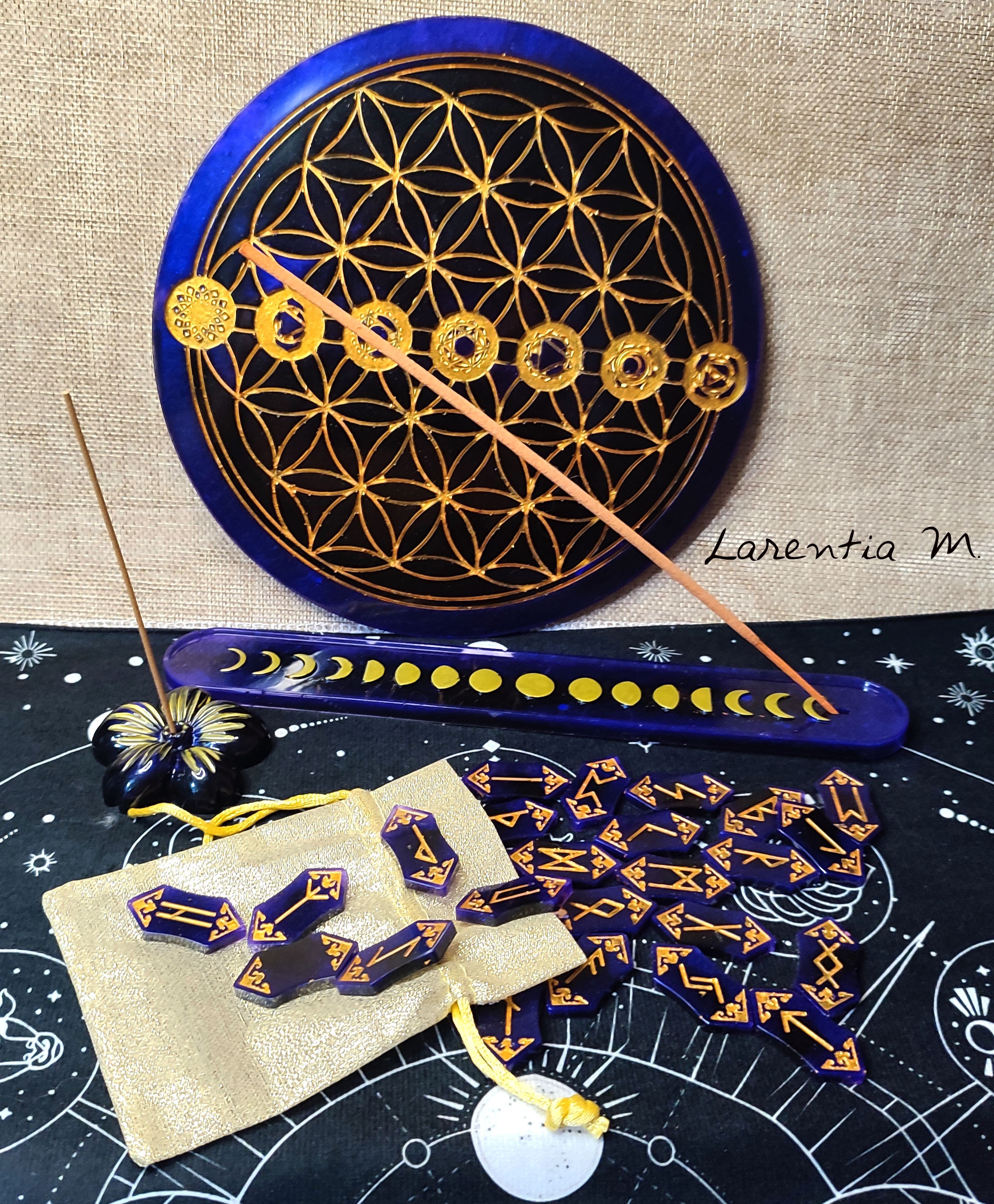 What is the flower of life? Spirituality objects and guidance on order!
The Flower of Life: A Universal and Eternal Symbol. My creations of objects linked to spirituality, to order:...Read more
What is the flower of life? Spirituality objects and guidance on order!
The Flower of Life: A Universal and Eternal Symbol. My creations of objects linked to spirituality, to order:...Read more -
 The symbolism of the color "Blue"
The color blue, omnipresent in our environment, possesses a rich symbolism that transcends ages and civilizations....Read more
The symbolism of the color "Blue"
The color blue, omnipresent in our environment, possesses a rich symbolism that transcends ages and civilizations....Read more
Leave a comment